What is an immersive website?
By Cross Elastic. Published 14 November 2026.
An immersive website is a website you move through like a place. You do not only scroll past text and pictures. You travel through a scene, pick things up, open doors, and the page responds to what you do.
How it differs from a normal website
A normal website is a set of pages. You read one, click a link and read the next. An immersive website is closer to a short film that you control. It usually runs in 3D, in the same browser you already use, on a phone or a laptop, with nothing to install.
You will also see these called 3D websites, interactive websites or WebGL websites. WebGL is the part of the browser that draws 3D, and three.js is the most common tool for building with it. They all describe the same thing from different angles.
What it is good for
- A product that is easier to understand when you can turn it around or see it in use.
- A brand that sells a feeling before it sells a feature: fashion, beauty, luxury, hospitality, events.
- A launch that should feel like an event and not a new row in a catalogue.
- A studio, architect or maker whose work is better shown than described.
When it is the wrong choice
If people come to your site to do one quick job, such as book a table, check a price or reorder, a 3D scene in the way will cost you orders. The honest test is simple: does moving through the space help someone decide, or does it only delay them?
The safest version does both. The experience sits around the shop, never in front of it, and the buy button is always one tap away.
What it takes to build one
- One idea. A single object or place that the whole site is built around.
- 3D scenes. Modelled, lit and trimmed down until they load quickly.
- Speed on phones. Most visitors arrive on a phone, so the site has to stay smooth there first.
- A plain version underneath. Search engines and screen readers need ordinary text and links, so every scene should also exist as a readable page.
Normal website and immersive website, side by side
| Normal website | Immersive website | |
|---|---|---|
| How you move | Scroll and click between pages | Travel through a scene, at your own pace |
| What it is made of | Text, photos and video | 3D scenes, with text and photos placed inside them |
| Best at | Answering a question quickly | Showing a product or a feeling you have to see |
| Loads | Almost at once | A few seconds, if it is built with care |
| Work to build | Design and code | Design, code, 3D scenes, and a lot of testing on phones |
| Risk | Looking like everyone else | Getting in the way of the thing people came to do |
The parts of an immersive website
Most of them are made of the same few pieces.
- A journey. The order you see things in. Usually the scroll moves a camera along a path, so the visitor is always in control of the pace.
- Scenes. The places along the way. Each one is a 3D set, built and lit like a small film set.
- Things to touch. A product that opens, a door that leads somewhere, a card that turns over. These are what make it feel like a place and not a video.
- Words. Short lines that arrive at the right moment. An immersive site still has to say what the business does.
- Sound. Optional, always off until the visitor turns it on.
- The way out. A shop, a booking or a contact form, reachable from anywhere.
Questions people ask
Does it work on a phone?
It should, and it should be designed for the phone first. That means lighter scenes, larger tap targets and often a separate upright layout. If a studio shows you only the laptop version, ask to see the phone.
Will it be slow?
Only if nobody trims it. The work is in what you leave out: fewer lights, smaller images, scenes that load when you get near them. A well made immersive site shows its first screen in a few seconds on an ordinary phone.
Can everyone use it?
Not unless there is a plain version too. People using screen readers, old devices or slow connections need ordinary pages with the same content. So do search engines. Treat the plain pages as part of the job, not an extra.
Can it sell things?
Yes. The scene can hold real products with real prices, and the button can go straight to your existing checkout. The store stays where it is. The site becomes a better way to arrive at it.
Is it only for big brands?
No. The size of the brand matters less than whether there is something worth showing. A small maker with one beautiful product is often a better fit than a large company with a long catalogue.
Does it hurt search rankings?
It can, if the whole site is a 3D canvas with no text behind it. It does not have to. This site is built in 3D, and every project and service also has a plain page that loads in under two seconds. Search engines read those.
Examples you can open now
These are our own. Each one is a concept or a prototype we made to show what we would build.
After Curfew
Concept · Game
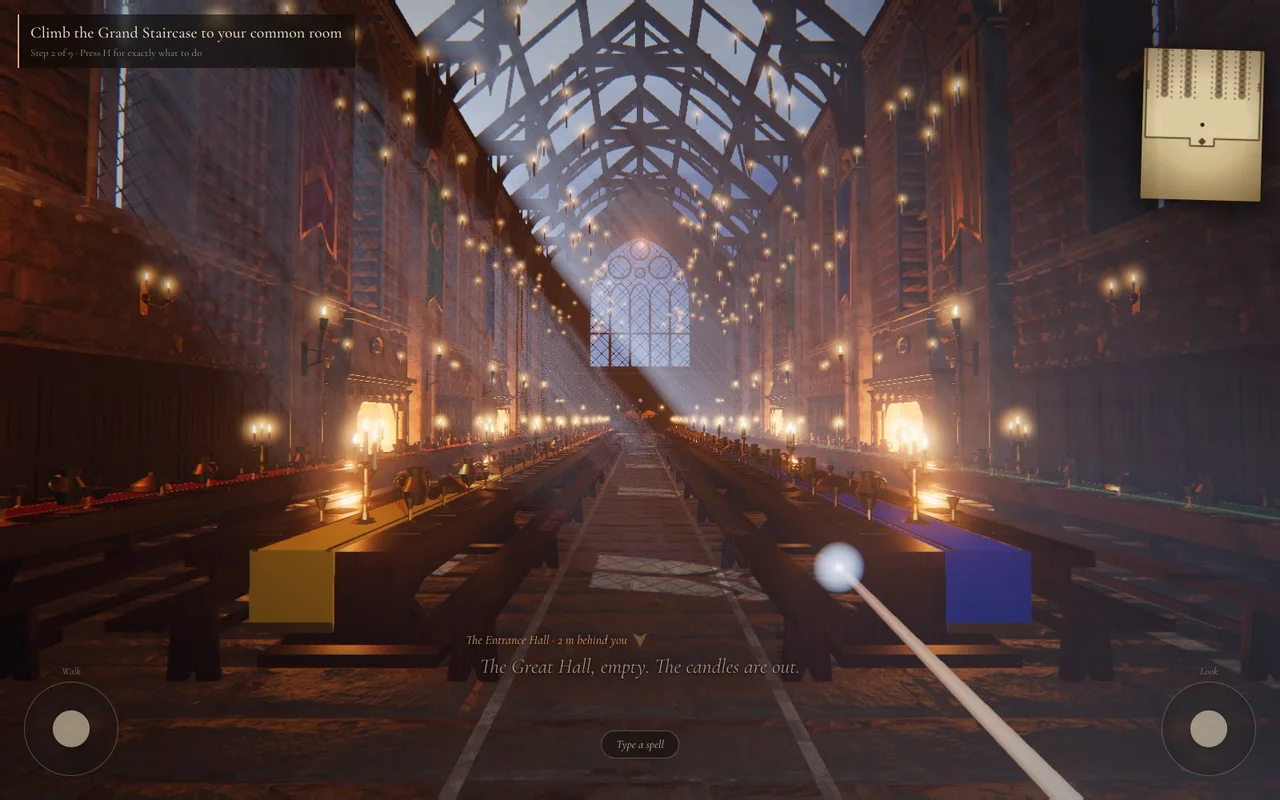
A castle you walk through by wand light, with spoken spells and twelve joined rooms.
The Glass Voyage
Concept · Luxury
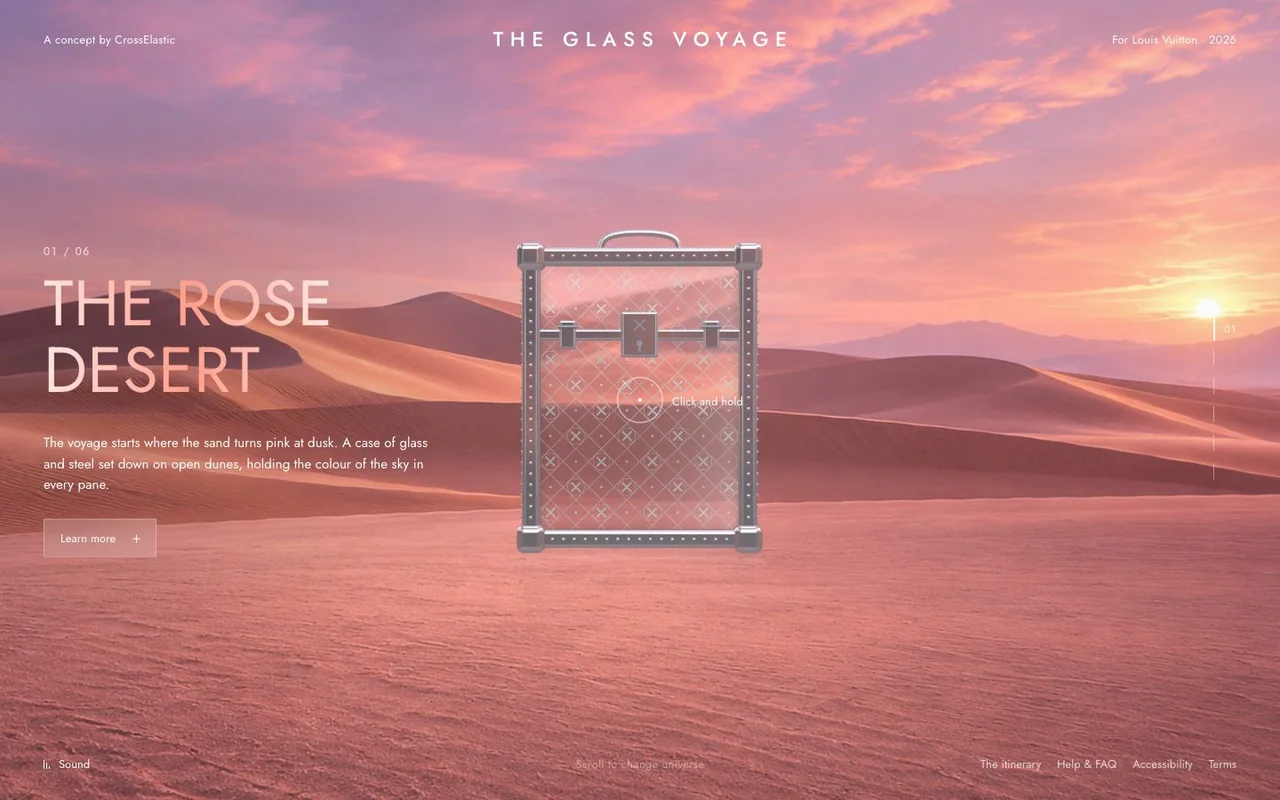
A glass travel case carried through six landscapes. Press and hold, and it opens.
Jaywalking
Prototype · 3D commerce
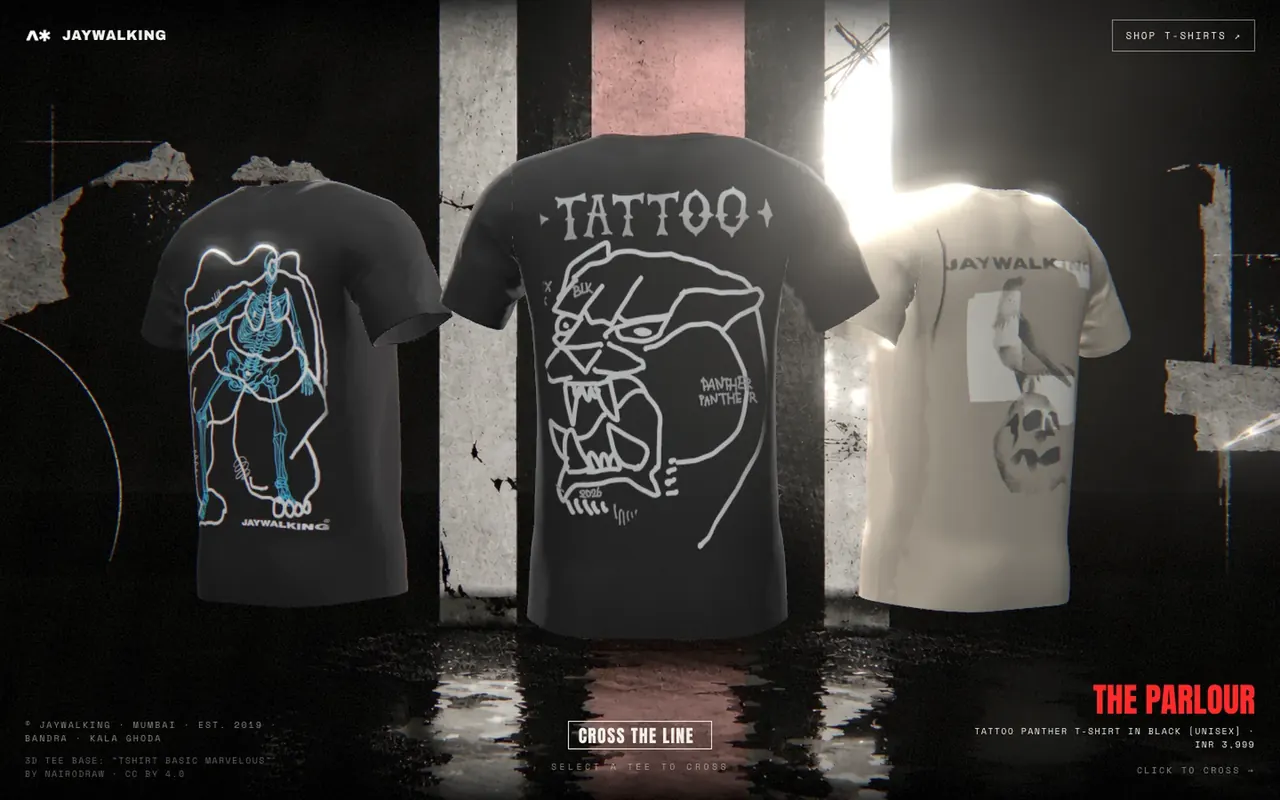
A T-shirt drop set in three rooms, with a shop button in each.
There are more on the work page, and a longer list in 3D website examples.